

Ludwig Schuurman has unlocked the secrets of the Black Island
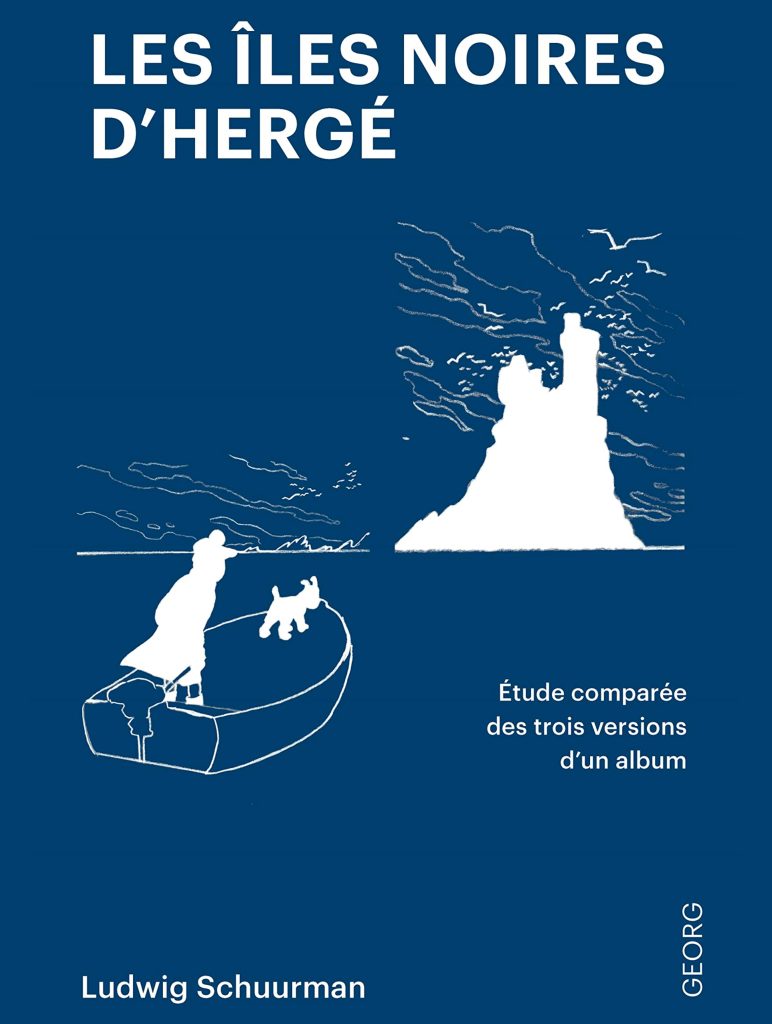
This is a book that the tintinophile have been waiting for many years ! Ludwig Schuurman is the author of Hergé in the land of the black islands, the first doctoral thesis in literature entirely devoted to Tintin and his creator. Supported in 2009, with the congratulations of the jury. At the time, only a privileged few were able to discover its contents. Schuurman published summaries of his thesis in various collective publications. From what to make his readers salivate while leaving them hungry. But everything comes at the right time. A revised and enriched version of Ludwig’s work Schuurman was published last April by Georg under a new title : The Black Islands of Hergé
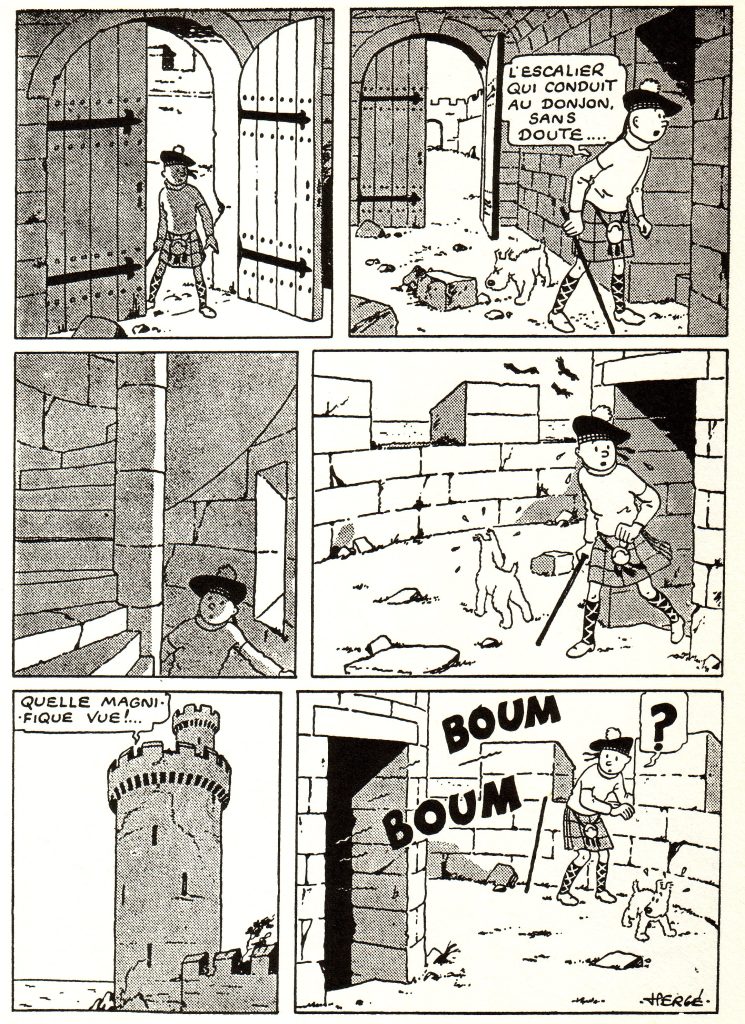
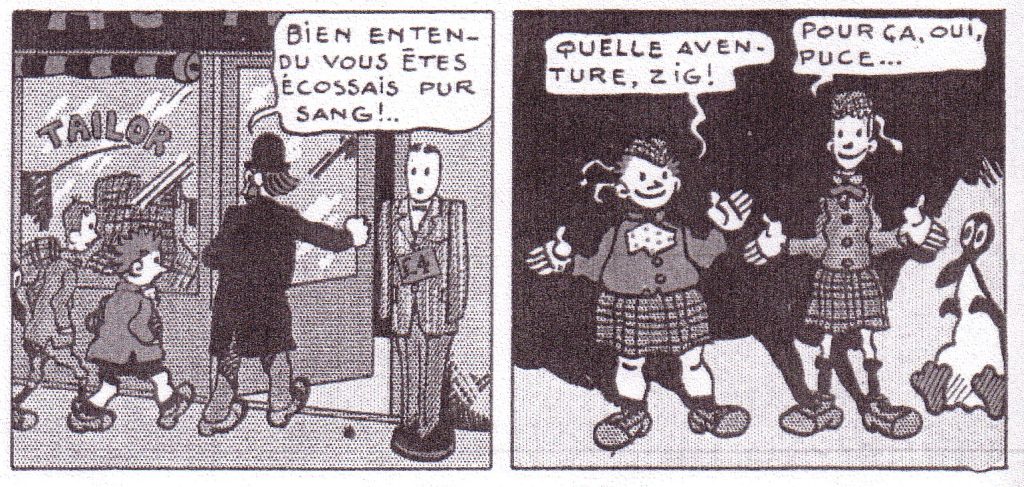
The Black Island is the “only band in the world to have been twice totally redesigned” the author to begin with (p. 20). We knew that this account of 124 plates, published by Casterman in 1938, had affinities with films like The 39 Steps of Hitchcock or King Kong (of which the monkey Ranko is a distant cousin). Ludwig Schuurman deepens these tracks. He also explores the islands the most famous of literature (Defoe, Stevenson). The most profound influence, according to him, is however the English Gothic Romanesque, whose traces until in children’s tales and cinema. Hergé borrowed many elements: castle, ruins, mysterious beast, supernatural atmosphere, etc. Tintin’s father also drew on the press and comics Zig and Puce of the one he considered as one of his masters, Alain Saint-Ogan.
Although the first edition of The Black Island appeared in black and white, it was with four colour text inserts, each of which is “both a table and vignette, an autonomous whole and a potential fragment of the whole” (p. 164). Schuurman analyses each of these images brilliantly. His study is also a pretext for digress on the Hergenian method: search for the efficiency of the stroke, passage of the black and white in full colour, etc. The second version was released in 1943 of The Black Island, after a work of recast in 62 boards. If the album was colorized, Hergé kept the original drawings, which always seduce by their "crazy line" the «soft sensuality of the trait» (expressions borrowed from Pierre Sterckx and Tardi, p. 187).
This is unfortunately not the case with the third version of the story, published in 1966. The creator of Tintin had chosen to completely redesign The Black Island in anticipation of its release in Great Britain, the English publisher Methuen having pointed 131 errors. If the adventure has gained in accuracy, it has lost its charm, Hergé Studios. Thus, Roger Leloup’s aircraft are “too authentic, too mimetic” (p. 289) and Bob De Moor’s decorations too pervasive. Ludwig Schuurman points out the inconsistencies of the latter version (the most common nowadays), the removal of Belgian or yet the play of the work. Everything was bland; even Tintin became too wise: in the original story, he jumped unscrupulously into the dumpster of a truck to save time. Now he’s hitchhiking politely.
The Black Islands of Hergé, by Ludwig Schuurman: more than 500 pages for 19 euros.
From the memory of tintinophile readers, we have never seen better value for money
Patrice GUERIN

