

Tintin beyond preconceptions Interview with Patrice Guérin
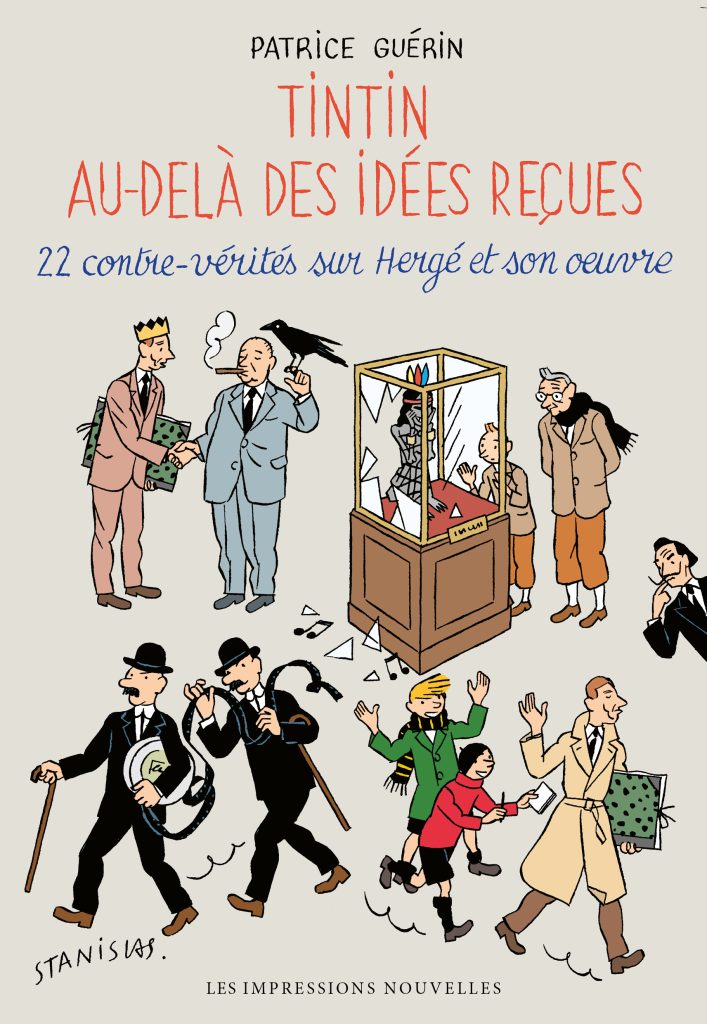


Patrice Guérin is a regular contributor to Beile's 'News' section. He has just published a new book, Tintin beyond preconceived ideaspublished by Les Impressions nouvelles. He tells us how he worked.
- First of all, can you introduce yourself?
- I've been a Tintinophile since the age of 10, after reading The World of Hergé by Benoît Peeters. I continued to read the albums, while also discovering other works of tintinology. I remember, for example, buying the Sunflower illustrated by Albert Algoud, in 1994. When I was 26, in 2006, I started writing my own articles about Tintinfor Colorado beetles!the journal of the Cercle Archibald. Since then, I've published many texts, contributed to books and presented a radio programme for a year. I also work as a freelance proof-reader.
- Why was the theme of preconceived ideas so close to your heart?
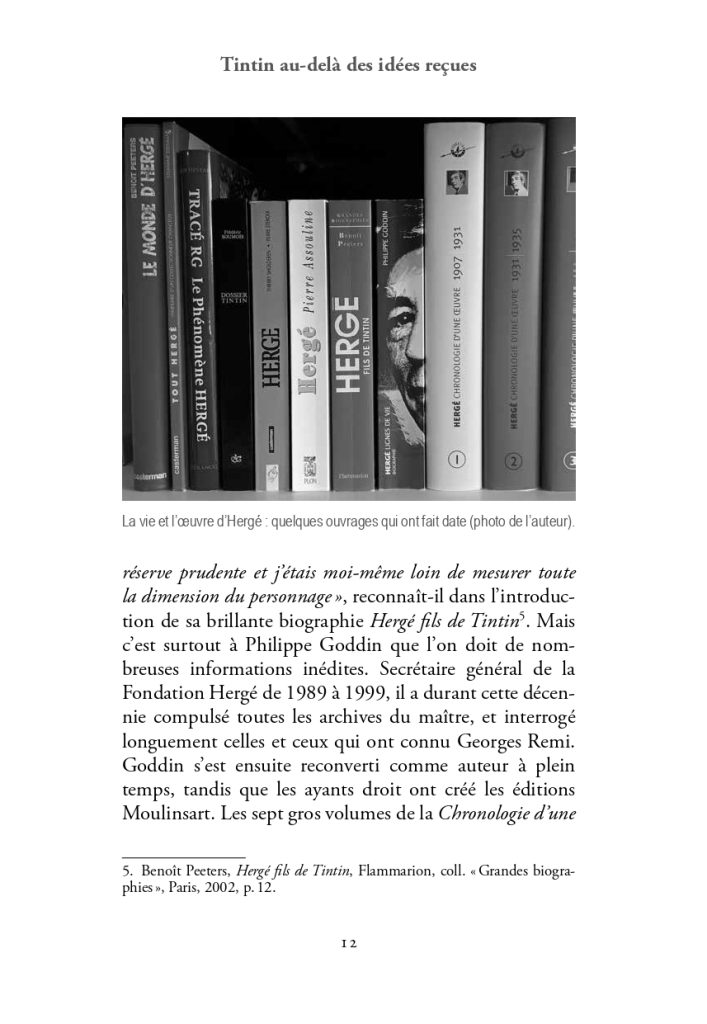
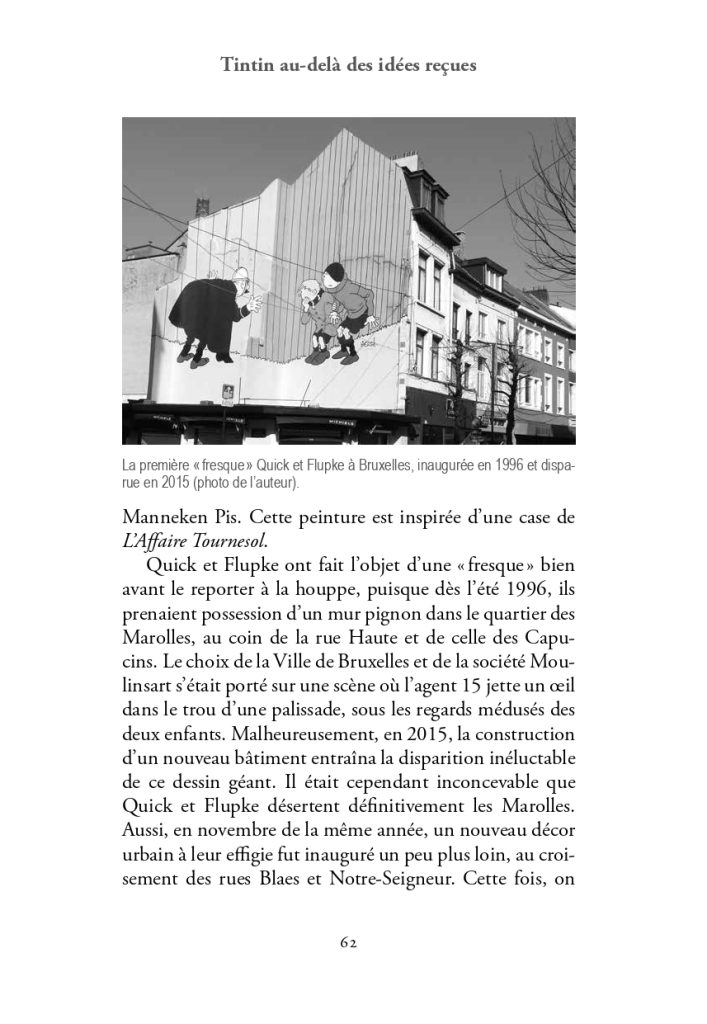
- Tintin beyond preconceived ideas is the intersection of a passion - the life and work of Hergé - and an interest in everything to do with perceptions, the way we see things and the way we think. fake newsbeliefs, etc. Over the last 25-30 years, I've read just about every book on Hergé and TintinAnd as I regularly consult these documents, I've noticed that legends about Hergé and his work persist. For example, several articles claim that the Black Island was inspired by a French island. There's also the belief that Quick and Flupke are kids from Les Marolles, an old district of Brussels. And I've already published in Colorado beetles! a text on Dalí's forged telegram, exhibited at the Hergé Museum (and which I have included in my book).
And then in the summer of 2020, there was a dispute, via social networks and the media, between the Pairi Daiza zoo and the Art & History museum in Brussels. Both claimed to own the real mummy that inspired Rascar Capac. And yet Hergé based his work on an engraving in the Larousse! I thought it would be fun to tell the story of how the legend came to be.
But the idea of a book didn't come until the following year. There was more and more talk of fake news and debunking. I sometimes watch programmes on YouTube like those by Thomas C. Durand, devoted to critical thinking in science, on his channel La Tronche en biais. The work of Aldhhaa, the Association for Combating Misinformation in History, Art History and Archaeology, is also fundamental and fascinating. And I don't know if I've heard of the videos by Yann Bouvier, alias YannToutCourt, a teacher who dismantles preconceived ideas in History.
Anyway, on my own little level, I thought that doing the same thing on Hergé would be interesting, and I worked on this book between spring 2021 and summer 2022. It was during its preparation that I discovered, for example, new information about the first film adapted from Tintin, The Crab with the Golden Claws. I have also retraced the true story of Arnold and Susan, the Chinese couple whom Hergé met in Brussels in the 1930s. Contrary to popular belief, Hergé didn't even know them when he started the story. The Blue Lotus. Some of the preconceived ideas I deal with have already been debunked, but I was interested in understanding how they came about and why they remain so persistent. And I was sometimes surprised!
- What subject would you like to work on now?
- I've had a book written for a while now, which will be coming out in September. It's about The Broken Ear and the Arumbaya fetish. I'm preparing other books on Hergé, but I'd rather not reveal the subjects right now, because it's a long-term project, and I sometimes have to postpone writing them because of a lack of time or information. I'm also gathering documentation on cinema and other fields, for other projects.
The first edition (numbered and limited to 140 copies, with a bookplate) is available from ICI.
Beile.fr